Master DBT Skills with Interactive Practice: TIPP, DEAR MAN, and More
Learning DBT skills from a book is one thing - actually using them in crisis moments is another. Discover how interactive skills practice with video guidance, timers, and audio instructions helps you build muscle memory for when you need it most.
On this page
- The Practice Gap in DBT
- Skills Organized by Module
- The Four Modules
- Deep Dive: TIPP Skills for Crisis Moments
- Why TIPP Works
- Temperature: The Science of Cold Water
- Three Ways to Practice
- Practice with Guided Video and Timer
- Deep Dive: DEAR MAN for Difficult Conversations
- The DEAR MAN Acronym
- Interactive DEAR MAN Practice
- Why Guided Practice Matters for Communication Skills
- Building Your Practice Routine
- Recommended Practice Schedule
- Track Your Practice
- The Difference Practice Makes
- Start Practicing Today
If you've ever tried to use a DBT skill during an emotional crisis, you know the challenge: your mind goes blank, you can't remember the steps, and the skill that seemed so simple in therapy feels impossible in the moment.
That's because reading about skills isn't the same as practicing them. Just like learning to drive or play an instrument, DBT skills require muscle memory - the kind that only comes from repeated, guided practice.
The Practice Gap in DBT
Traditional DBT learning follows a predictable pattern: your therapist teaches a skill, you take notes, maybe you complete a worksheet, and then... you're expected to use it perfectly when emotions hit 100.
Here's the problem: stress impairs memory retrieval. When you're in crisis mode, your prefrontal cortex (the part that recalls those carefully written notes) goes offline. What remains accessible? Practiced behaviors. Muscle memory. Things you've done so many times they're automatic.
This is why DBT Coach now includes Interactive Skills Practice - a completely new way to learn and internalize DBT skills through video guidance, timed exercises, and audio instructions.
Skills Organized by Module
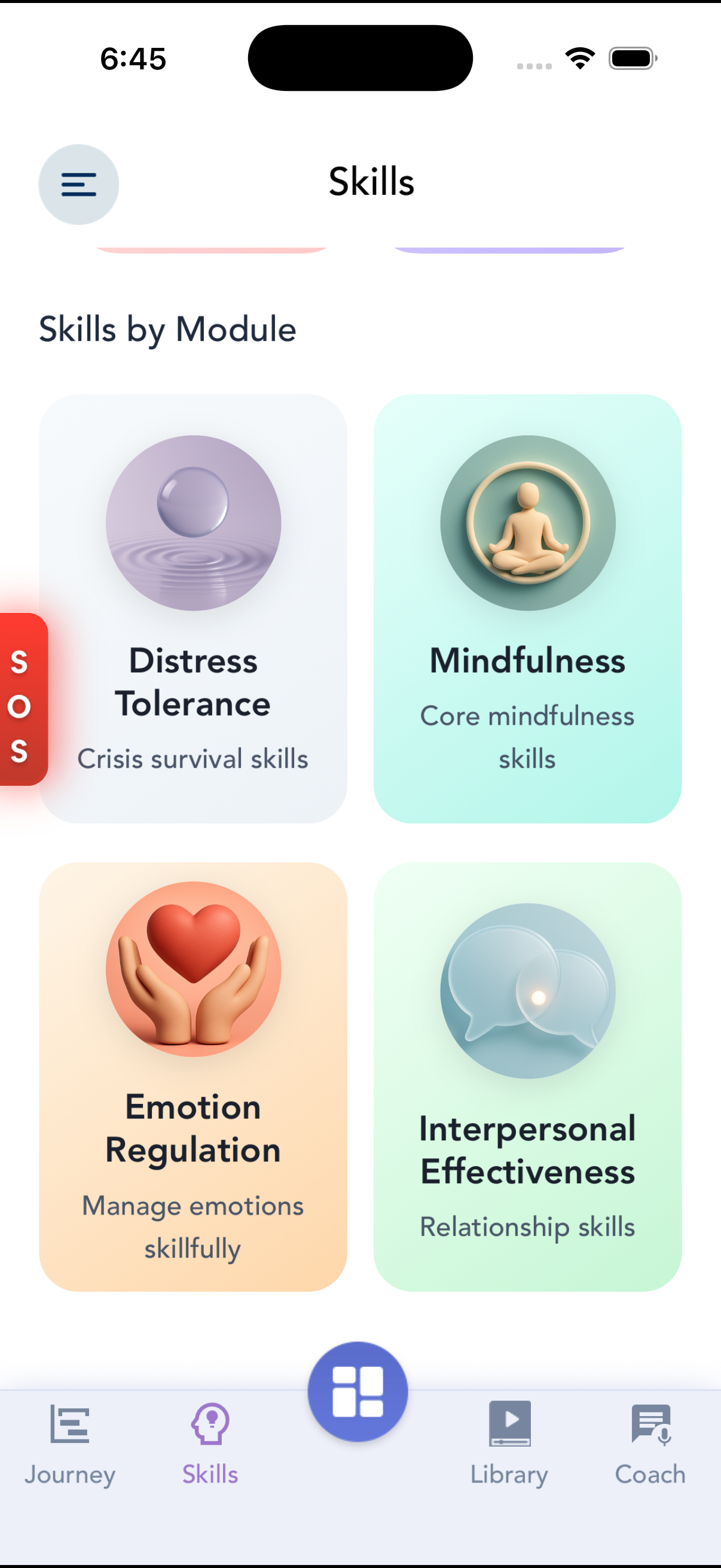
DBT Coach organizes all 50+ interactive skills across the four core DBT modules, making it easy to find exactly what you need:
The Four Modules
- Distress Tolerance: Crisis survival skills for when emotions feel unbearable
- Mindfulness: Core awareness skills that underpin all of DBT
- Emotion Regulation: Tools to understand and manage your emotional responses
- Interpersonal Effectiveness: Skills for maintaining relationships while advocating for yourself
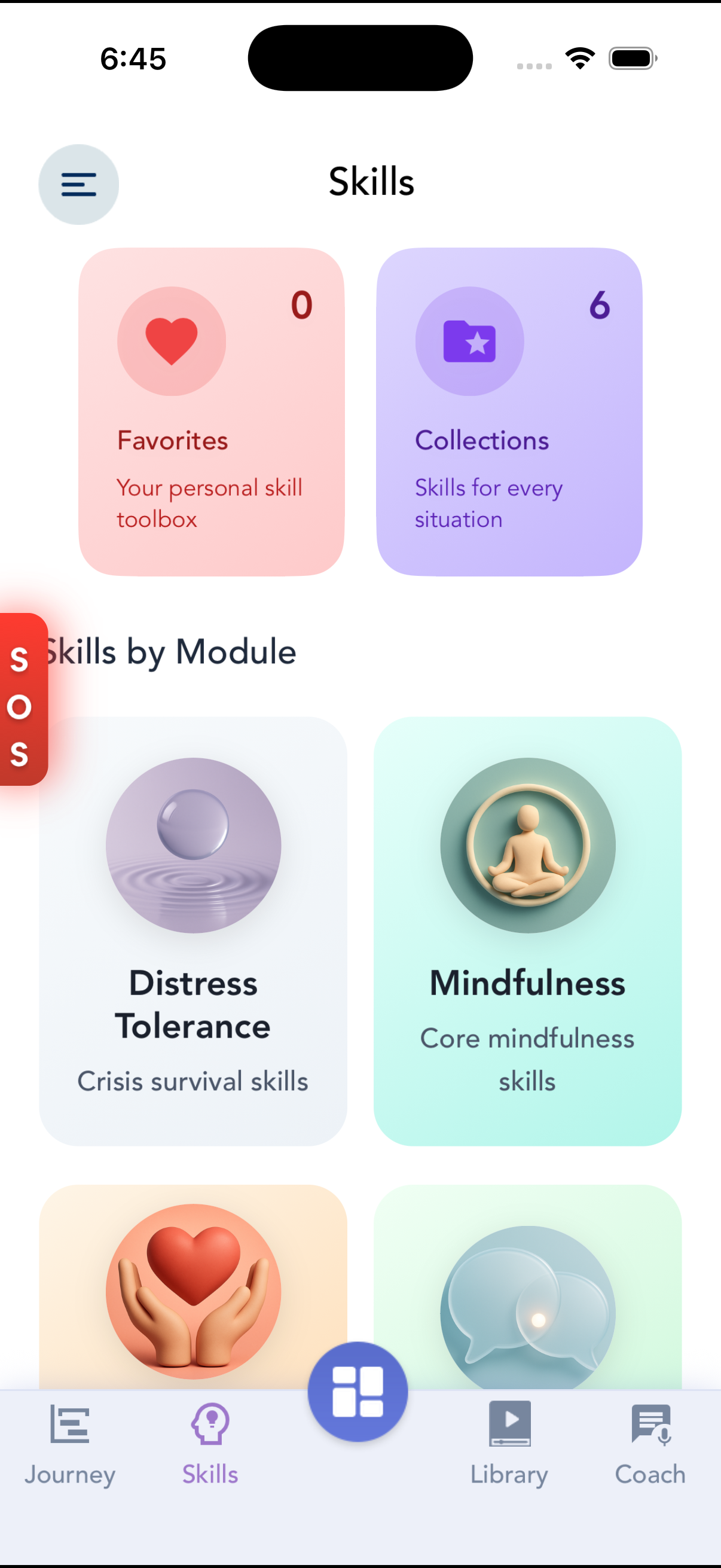
You can also save frequently used skills to your Favorites or browse curated Collections for specific situations.
Deep Dive: TIPP Skills for Crisis Moments
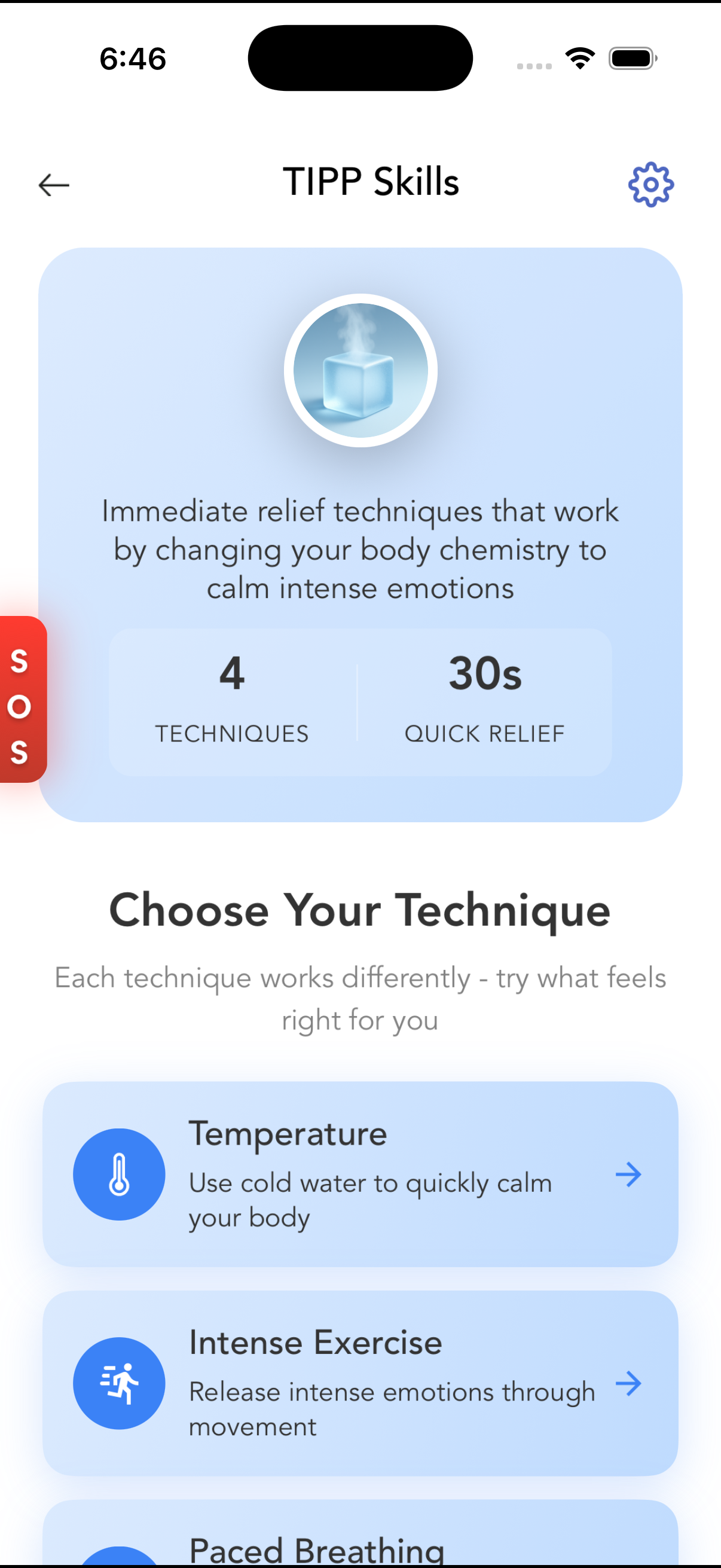
TIPP is one of the most powerful distress tolerance skills in DBT. The acronym stands for:
- Temperature
- Intense Exercise
- Paced Breathing
- Paired Muscle Relaxation
These techniques work by directly changing your body chemistry to reduce emotional intensity - often within 30 seconds to a few minutes.
Why TIPP Works
When you're in emotional crisis, your sympathetic nervous system is in overdrive. TIPP skills activate the parasympathetic nervous system (your "rest and digest" mode) through physiological mechanisms that don't require complex thinking.
This is crucial because, as we discussed, complex thinking is exactly what shuts down during crisis.
Temperature: The Science of Cold Water
The Temperature technique leverages the dive reflex - an automatic physiological response that occurs when cold water touches your face. Your heart rate drops, blood vessels constrict, and your nervous system shifts toward calm.
Three Ways to Practice
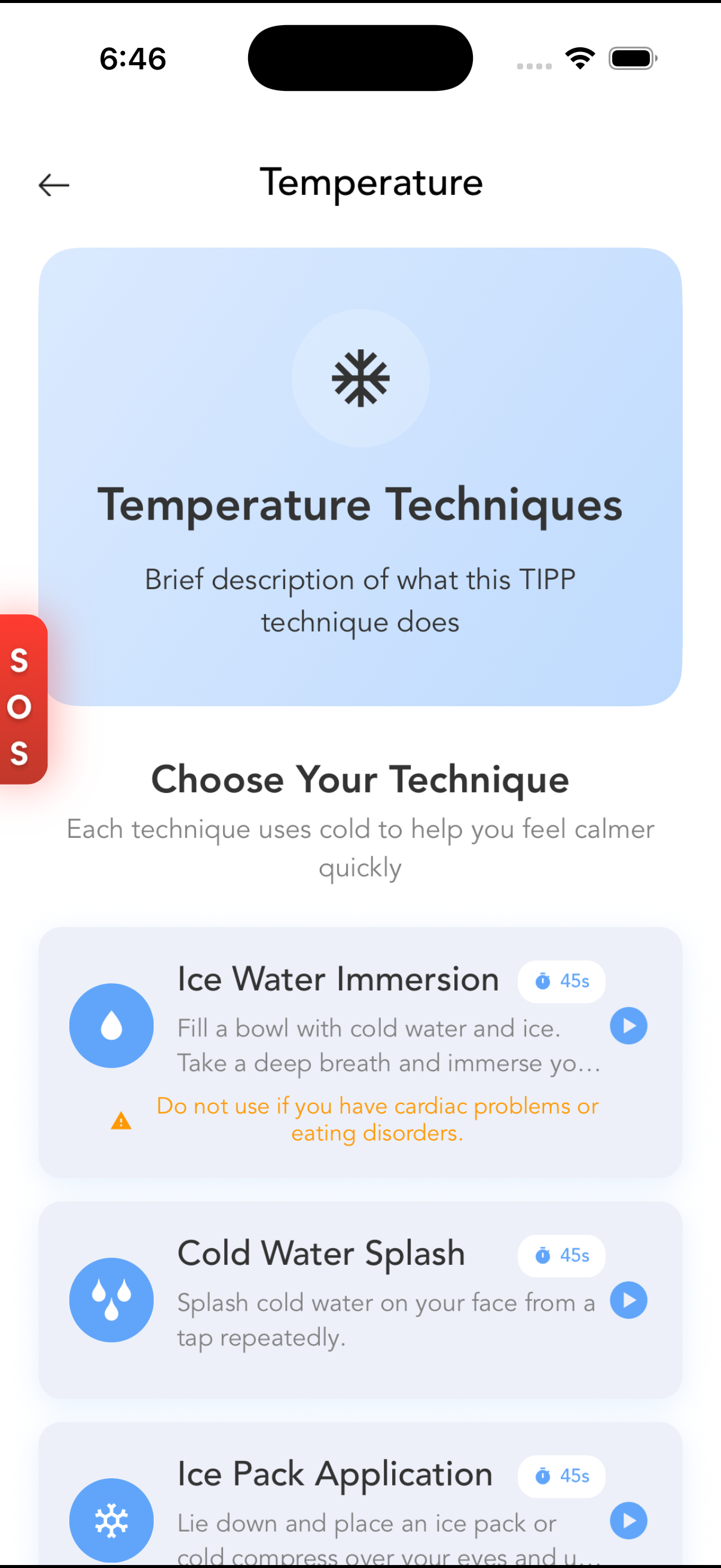
- Ice Water Immersion: Fill a bowl with cold water and ice, take a deep breath, and immerse your face for 30-45 seconds
- Cold Water Splash: Repeatedly splash cold water on your face from a tap
- Ice Pack Application: Place an ice pack over your eyes and cheeks
Each technique in DBT Coach includes:
- Clear video demonstrations
- Safety warnings (important for those with cardiac conditions)
- Guided audio instructions
- Built-in timers
Practice with Guided Video and Timer
Here's what interactive practice looks like for Ice Water Immersion:
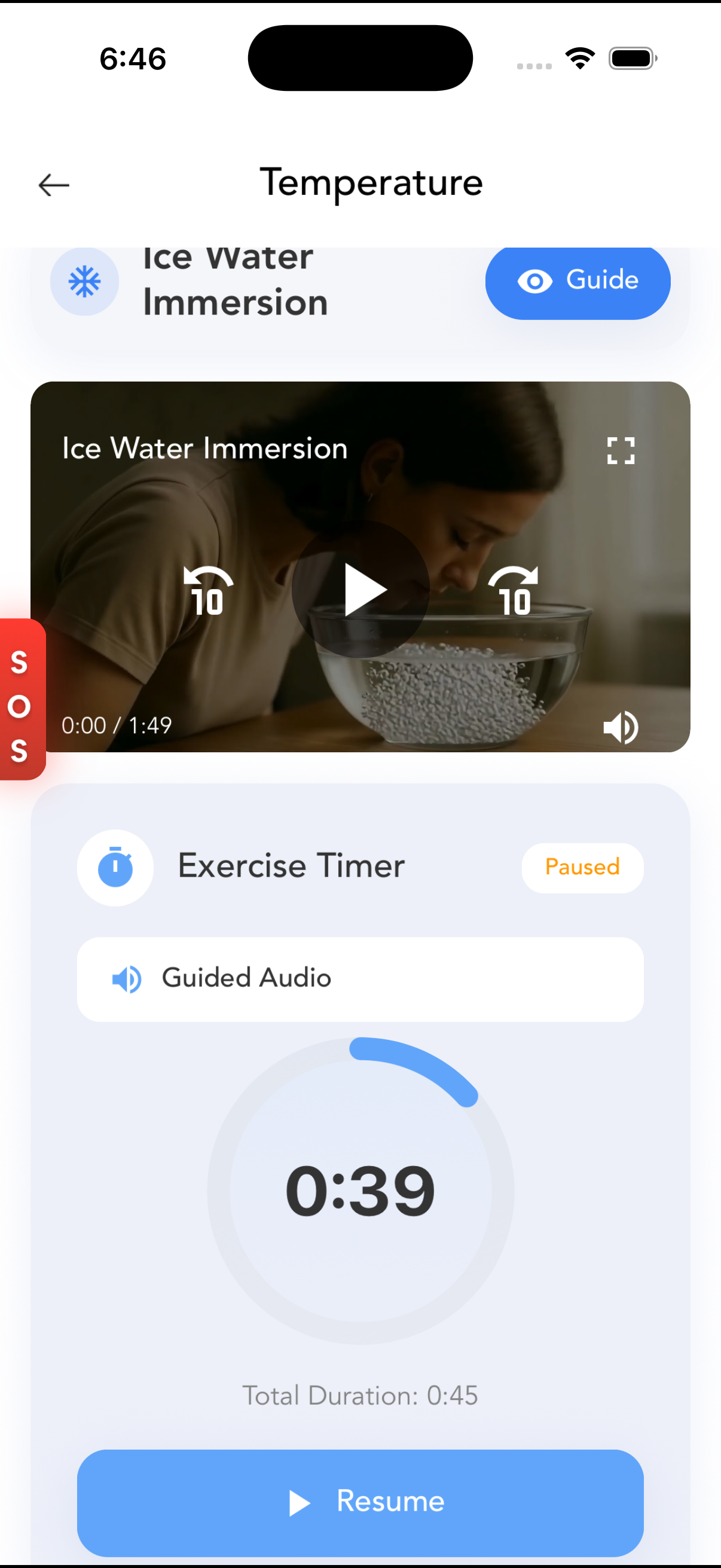
The screen includes:
- Video demonstration showing exactly how to perform the technique
- Exercise timer that counts down the recommended duration
- Guided audio that talks you through each step
- Quick Guide button for written reference
This multi-modal approach means you can learn visually, auditorily, and kinesthetically - whichever works best for you.
Watch a quick demo of how the Ice Water Immersion technique works in the app - complete with timer, audio guidance, and safety instructions.
Deep Dive: DEAR MAN for Difficult Conversations
While TIPP handles crisis moments, DEAR MAN helps you navigate the conversations that often lead to those crises in the first place.
DEAR MAN is an Interpersonal Effectiveness skill for asking for what you need (or saying no) while maintaining both the relationship and your self-respect.
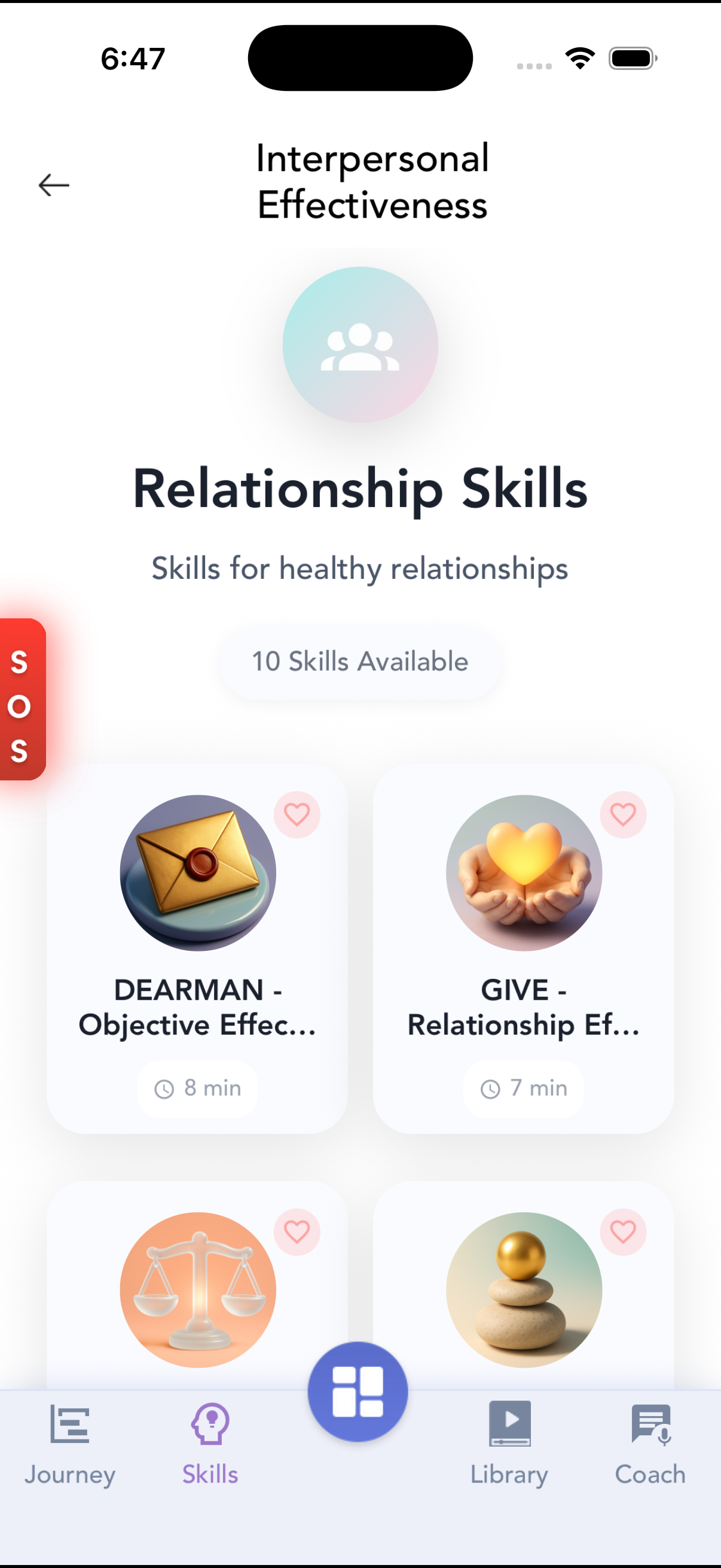
The DEAR MAN Acronym
DEAR (what you say):
- Describe the situation factually
- Express your feelings using "I" statements
- Assert what you want clearly
- Reinforce by explaining mutual benefits
MAN (how you say it):
- Mindful - stay focused on your goal
- Appear confident - even if you don't feel it
- Negotiate - be willing to give to get
Interactive DEAR MAN Practice
DBT Coach breaks DEAR MAN into 7 manageable steps with video guidance that takes 15-20 minutes to complete:
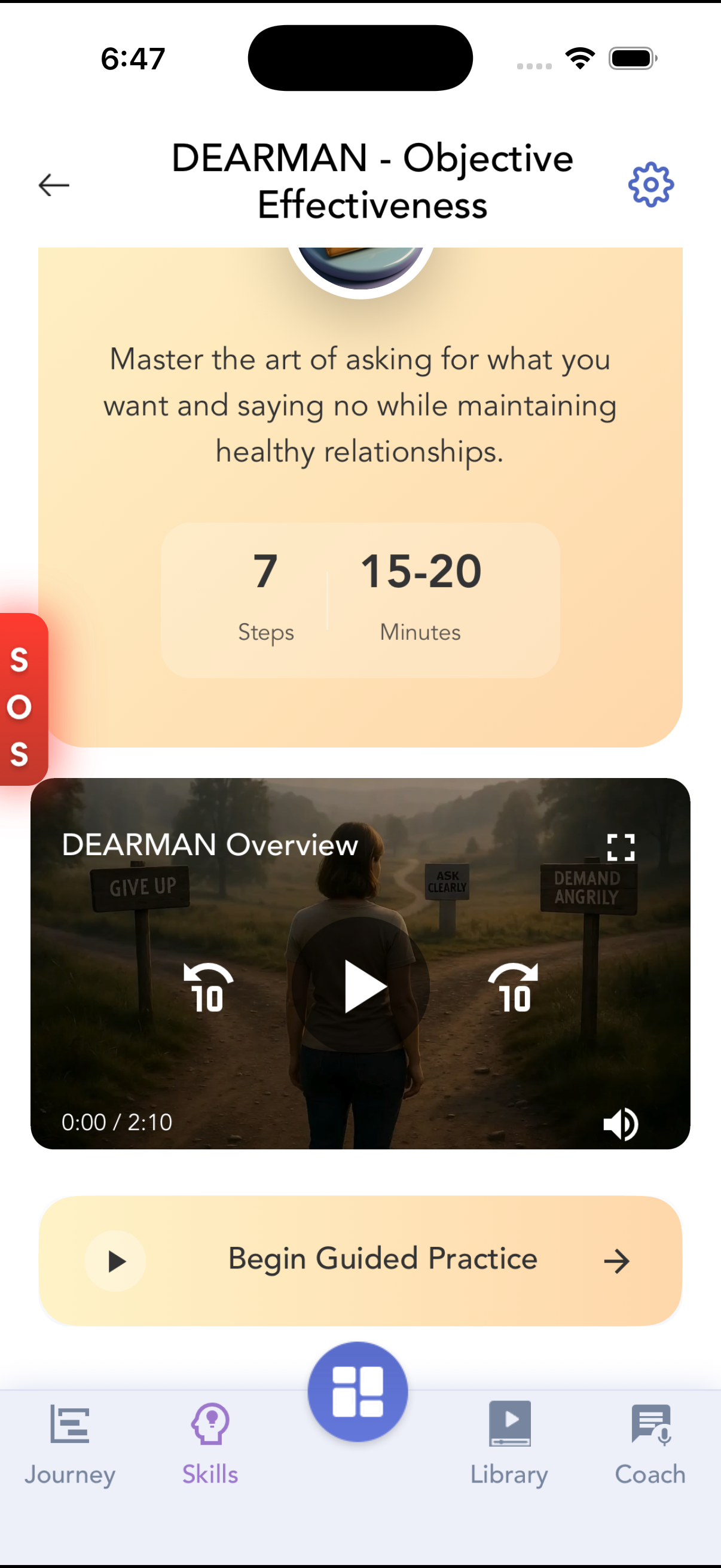
The practice includes:
- Overview video explaining the skill conceptually
- Step-by-step guided practice walking you through each component
- Real-world examples showing DEAR MAN in action
- Practice scenarios to try the skill yourself
Why Guided Practice Matters for Communication Skills
Communication skills are particularly hard to learn from reading alone. You need to:
- Hear the tone of voice
- See the body language
- Practice the actual words
Our video demonstrations show real examples of DEAR MAN conversations, so you can model effective communication before trying it yourself.
Building Your Practice Routine
The key to making DBT skills automatic is consistent practice - not just during crisis, but regularly when you're calm.
Recommended Practice Schedule
Daily (2-5 minutes):
- One mindfulness skill (like Wise Mind or Observe)
- Quick review of a distress tolerance technique
Weekly (15-20 minutes):
- Deep practice of one interpersonal effectiveness skill
- One new emotion regulation technique
As needed:
- Crisis skills when distress is high
- Communication skills before difficult conversations
Track Your Practice
DBT Coach tracks which skills you've practiced and when, helping you build a consistent routine. You can see:
- Which skills you've mastered
- Which need more attention
- How practice correlates with your emotional patterns
The Difference Practice Makes
Users who engage in regular skills practice in DBT Coach report:
- Faster skill recall during emotional moments
- Greater confidence in their ability to cope
- Reduced crisis intensity over time
- Better therapy outcomes when combined with professional DBT
Start Practicing Today
Every skill in DBT Coach includes:
- Video demonstrations by trained professionals
- Step-by-step audio guidance
- Built-in timers for timed techniques
- Written guides for quick reference
- Progress tracking to monitor your practice
Whether you're new to DBT or have been practicing for years, interactive skills practice helps bridge the gap between knowing a skill and being able to use it when it matters most.
Ready to transform your DBT practice? Download DBT Coach and explore our full library of 50+ interactive skills with video guidance, timers, and audio instructions.
Related articles
Dialectical Behavior Therapy Dbt
Radical Acceptance in DBT
Radical Acceptance is a skill taught in DBT that allows people to
Jul 13, 2020 · 4 min read
Dialectical Behavior Therapy Dbt
" Interpersonal Effectiveness in DBT: Learn effective communication skills"
"Interpersonal effectiveness skills in DBT teach us effective
Jul 6, 2020 · 6 min read
Dialectical Behavior Therapy Dbt
The DBT Diary Card: A Complete Guide
How the DBT diary card works, why daily tracking beats memory, and a step-by-step guide to filling one out with a worked example.
Mar 27, 2026 · 8 min read